Postpartum hair loss: why it happens and what you can do
Postpartum hair loss is normal and temporary. Learn why it happens, when it stops, and how to care for your hair and scalp in the meantime.

Hair during pregnancy: why it changes and how to care for it
Thicker hair, a greasy scalp or dry lengths? Hormones change your hair during pregnancy – here is the explanation and a gentle routine.

How to choose fragrance-free shampoo without compromising care
Fragrance-free shampoo can care for your hair just as effectively as scented shampoo. Learn what to look for on the declaration, and how to opt out of scent at LULAB.
How often should you wash your hair? A guide for your hair type and scalp
There is no single right answer – but there is a right answer for you. Here is our guide to how often you should wash your hair based on your hair type and scalp.

How to get cool brown hair (without red tones)
A guide to how you achieve and maintain cool brown hair without red tones. The dream of cool brown hair Cool brown hair often has a deeper, more elegant and natural tone.But it requires maintenance. Why does hair lose its cool tone? Over time, several things happen: Colour fades Warm undertones come through The hair is affected by sun, water and styling This gradually makes the hair warmer in tone. 3 steps to a cooler result 1. Use colour-correcting products Blue shampoo is the most effective tool for neutralising warm tones. 2. Choose gentle hair care Sulfate-free, caring products help preserve the colour for longer. 3. Maintain your hair colour Regular care is the key to keeping the tone cool. The modern solution: customised hair care with added blue pigment By combining personalised hair care with pigment, you can: Adapt to your hair's needs Achieve healthy hair Work actively with your hair colour So, what does this mean? Cool brown hair is not just about colour, but about maintenance. With the right products and routines, you can keep your hair free from red and warm tones and preserve a beautiful, balanced shade. Try our Customised Blue Shampoo here

How to neutralise red and warm tones in brown hair
Do you see red or warm tones in your brown hair? Learn how to neutralise them and achieve a cooler hair colour. Why does brown hair turn red or warm? Many people find that their brown hair develops a warm tone over time. It can show up as reddish, golden or yellowish tints, especially if the hair is coloured or lightened. This is mainly due to two things: The hair's natural melanin (warm pigments) Old colour pigments that gradually come through Even if you start with a cool brown colour, these undertones will often appear over time. What can you do about warm tones in brown hair? If you want cooler brown hair, it is all about working with the colour wheel. Warm tones (red/orange/yellow) are neutralised by cool pigments, especially blue. Why blue shampoo works A blue shampoo is developed to: Neutralise red and orange tones Restore balance in the hair colour Prolong a cool brown shade With regular use, you can keep your hair cooler and more even in colour. Combine care and colour correction The most important thing is that your shampoo not only corrects the colour but also cares for your hair. A customised formula with pigment can: Protect the hair Add shine and softness Work actively with the colour Why we launched blue hair care If your brown hair turns warm in tone, it is completely natural.But with a blue shampoo, you can easily restore a cooler and more balanced shade.Read more about our Customised Blue Shampoo here

How to rescue your hair after the holidays
Sun, salt and chlorine dry the hair and build up on the scalp. Here is how to cleanse and restore it without stripping.
How to brush your hair correctly
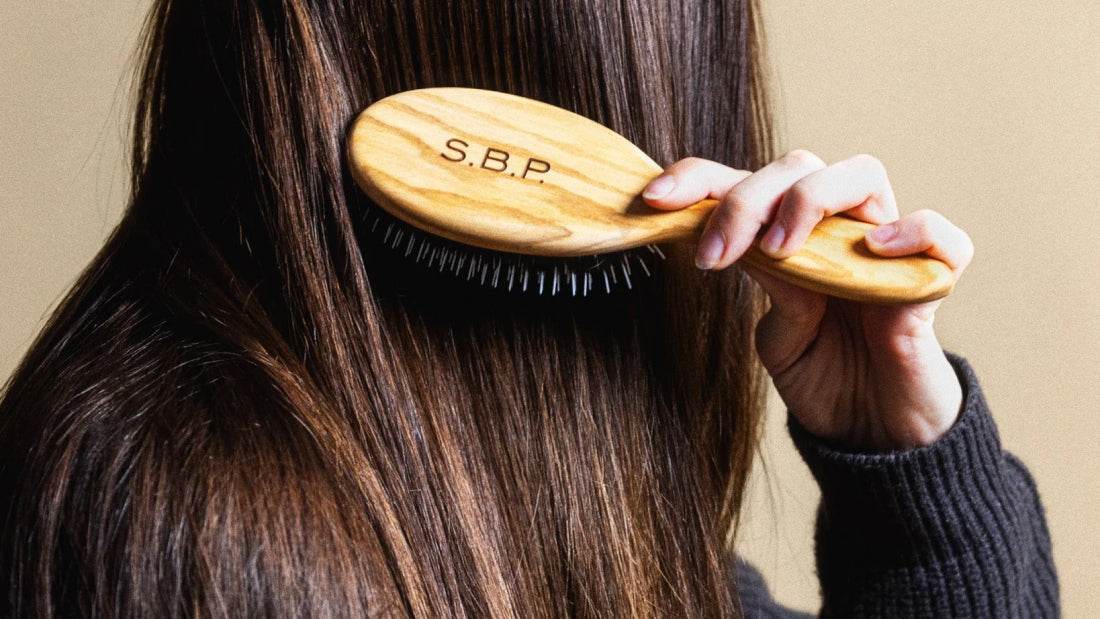
The foundation for a healthy hair care routine Brushing is one of the most overlooked aspects of hair care. For many, it's solely about detangling or styling hair. In practice, proper brushing is a crucial factor for hair quality, shine, and resilience. When the technique is right and the brush is chosen carefully, brushing becomes an active grooming tool. Why is brushing important? Regular and correct brushing has several documented benefits for both hair and scalp: • Stimulates blood circulation in the scalp• Supports a healthy environment for hair growth• Removes dust, particles, and product residue• Distributes the scalp's natural oils from root to tip• Reduces frizz and static electricity• Contributes to increased shine and suppleness Especially boar bristle brushes have the ability to distribute sebum evenly through the hair. This is a natural way to nourish and protect the hair fiber. Brushing can reduce the need for frequent hair washing When the scalp's natural oils are distributed correctly, the oily appearance at the roots is reduced. At the same time, the lengths receive natural protection. This means that many can gradually increase the interval between hair washes. Expect an adjustment period: • Short hair: 1 to 3 weeks• Medium hair: 3 to 5 weeks• Long hair: 5 to 8 weeks Over time, the hair will appear more balanced, lighter, and shinier. The correct method in three steps Step 1: Detangling Purpose: To remove tangles without stressing the hair fiber. Time: Late in the day. Method: Always start at the ends and work gradually up towards the roots. Move section by section to minimize pulling on the hair. Use a flexible Detangle brush with a natural rubber cushion and gentle bristles that reduce mechanical wear. Note: Hair is most vulnerable when wet. Therefore, primarily detangle in dry or slightly damp hair. For very curly hair, detangling before washing may be gentlest. Step 2: Care brushing Purpose: To stimulate the scalp and distribute natural oils. Time: In the evening, as a regular part of your routine. Method: Apply the 100 strokes technique daily, distributed as follows: • 25 strokes with head bent forward from nape to ends• 25 strokes from forehead to nape• 25 strokes with head to the left• 25 strokes with head to the right Use a boar bristle brush, which effectively collects and distributes sebum through the hair. The mechanical stimulation supports microcirculation and contributes to a healthy scalp. Step 3: Structure and protection in the morning A quick brush in the morning provides structure and volume. At the same time, the natural oils that have worked through the hair overnight are distributed. The result is more unified and resilient hair throughout the day. What can you expect? With consistent brushing, many experience: • Less frizz• Increased shine• Stronger lengths• More balanced scalp• Fewer broken hair strands The effect builds up gradually. Brushing is not a quick fix, but a sustained method to naturally improve hair quality. A simple tool with great significance A quality brush made from natural materials such as olive wood, natural rubber, and boar bristles is designed for daily use for many years. When technique and tool work together, brushing becomes an integral part of a healthy hair care routine. Healthy hair starts at the scalp. And the foundation is created daily. See all LULAB's olive wood hairbrushes – choose by hair type and add your engraving.
The benefits of a boar bristle brush
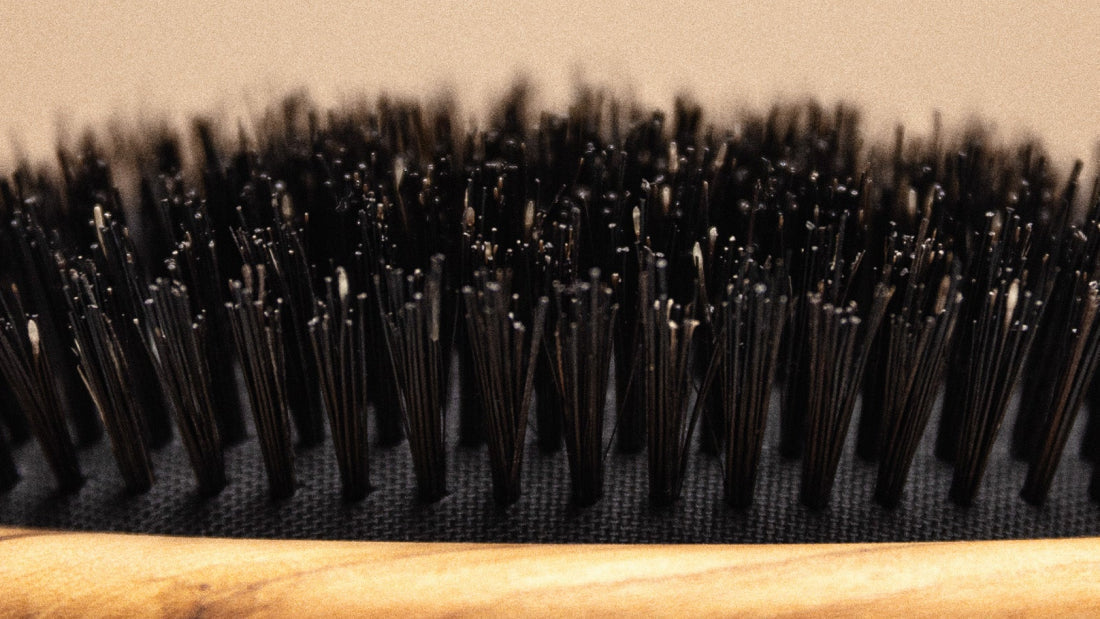
Not all boar bristle brushes are the same. The part of the hair known as first cut is the most robust and functional part of the fiber. When used correctly and precisely mounted at different heights, the right combination of firmness and flexibility is achieved. Combined with a solid wood handle and a flexible natural rubber cushion, a construction is created that can last for decades. A quality boar bristle brush is not a temporary product. It is a tool that can accompany you throughout your life with proper maintenance. A natural approach to hair care By integrating a boar bristle brush into your daily routine, you work with your hair's own resources rather than against them. It is a simple method to: • Improve hair structure• Strengthen lengths• Create natural shine• Support scalp balance Healthy hair builds up over time. And the foundation begins with the tool you use every day.The benefits of using a boar bristle hairbrush A hairbrush is not just a styling tool. It is an active part of your daily hair care. The choice of material directly affects hair quality, shine, and resilience. A boar bristle brush is among the most thoroughly tested and used tools in professional hair care. The reason is simple: the material's structure works with the hair rather than against it. Boar bristles are a fiber related to your own hair Boar bristles, like human hair, consist of keratin. This makes the fiber unique in hair care. No synthetic materials have the same composition. The natural, slightly fibrous surface makes it possible to: • Collect excess sebum from the scalp• Distribute oil evenly through the lengths• Naturally protect the hair fiber• Increase shine and suppleness This mechanical distribution of the scalp's own oils is one of the most effective and natural ways to improve hair quality. Documented benefits of regular use With consistent use, many experience the following improvements: • Increased natural shine• Less frizz and fewer flyaways• Softer and more pliable hair• More balanced scalp• Less need for frequent hair washing• Reduced static electricity• Slightly increased volume at the roots The effect occurs gradually because the hair's natural oils are distributed uniformly from root to tip. Gentle on the scalp Boar bristles provide even and controlled stimulation of the scalp. The mechanical massage supports blood circulation without being abrasive. A balanced scalp is a prerequisite for healthy hair growth and lasting hair quality. Quality makes the difference See all LULAB's olive wood hairbrushes – choose by hair type and add your engraving.
How to choose the right hairbrush for your hair type
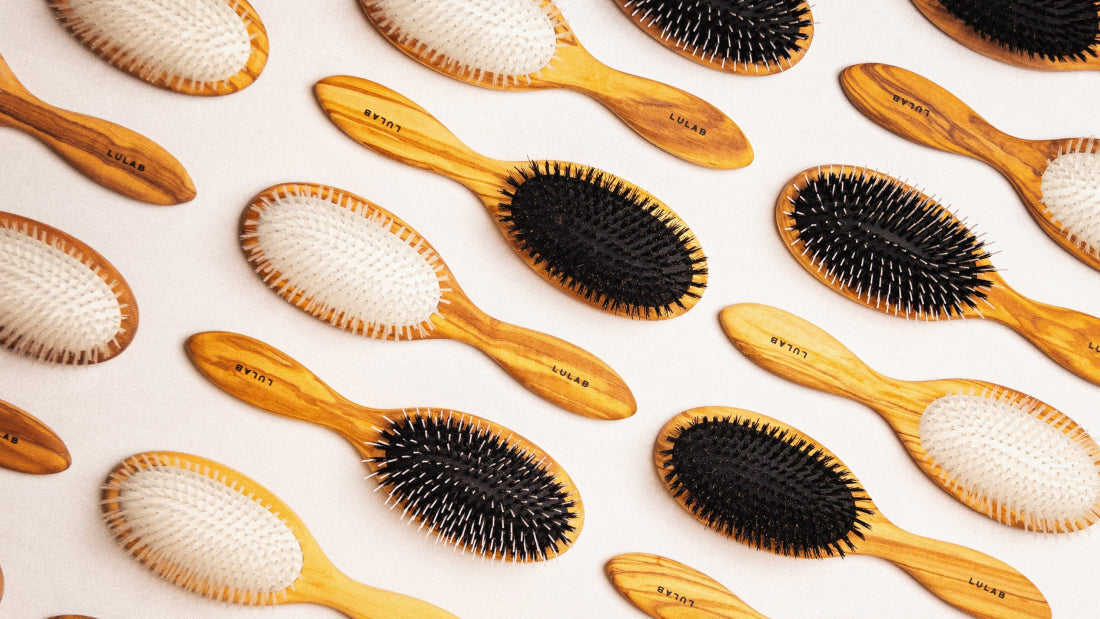
The choice of hairbrush directly impacts hair quality. Texture, density, and scalp condition should always be considered in the decision. The right brush can improve shine, reduce damage, and support a healthy scalp. The wrong one can do the opposite. Here’s an expert-backed guide to choosing correctly. Fine to normal hair with low to medium density Fine hair is more vulnerable to mechanical stress. When wet, the hair fiber is particularly elastic and thus more susceptible to breakage. Recommendation: • Primarily brush hair when it is dry or slightly damp• Use a gentle Detangle brush with flexible bristles for detangling• Use a Care brush with boar bristles for daily care A boar bristle brush is particularly suitable for finer hair types, as it distributes the scalp’s natural oils and adds shine without weighing it down. Over time, it can contribute to increased volume and more texture. Thick and dense hair Thick hair has greater resilience but requires a brush that can work through the density without creating unnecessary friction. Recommendation: • A Detangle brush with flexible nylon bristles for efficient and controlled detangling• A Care brush with boar bristles for distributing natural oils For thick hair, the combination of flexible bristles and natural bristles can be crucial for achieving both control and care. Regular brushing increases suppleness and reduces sebum buildup on the scalp. Wavy and curly hair Curly and wavy hair has a natural structure that must be treated with respect. Dry brushing can disturb the curl pattern and create frizz. Recommendation: • Detangle hair while damp with a flexible Detangle brush• Work section by section to minimize stress When hair is dry, a Care brush can be used more selectively to stimulate the scalp and distribute natural oils, depending on the curl density. The goal is to maintain elasticity and definition. Oily scalp For those with an oily scalp, correct brushing is particularly important. Recommendation: • Use a boar bristle brush daily• Brush from root to tip to distribute excess sebum When the oil is distributed through the lengths, the oily appearance at the roots is reduced, and the hair looks more balanced. Over time, it can make it easier to extend the interval between hair washes. What should you pay attention to? When choosing a hairbrush, you should consider: • Hair structure• Hair density• Scalp balance• Whether the hair primarily needs detangling or care In practice, many will benefit from two brushes: One for detangling and one for care. A tool with long-term significance A quality brush made from natural materials such as olive wood, natural rubber, and boar bristles is designed for daily use for many years. It supports the hair's natural functions rather than working against them. Healthy hair doesn't happen by chance. It starts with the choices you make in your daily routine. See all LULAB's olive wood hairbrushes – choose by hair type and add your engraving.
How to clean your hairbrush correctly
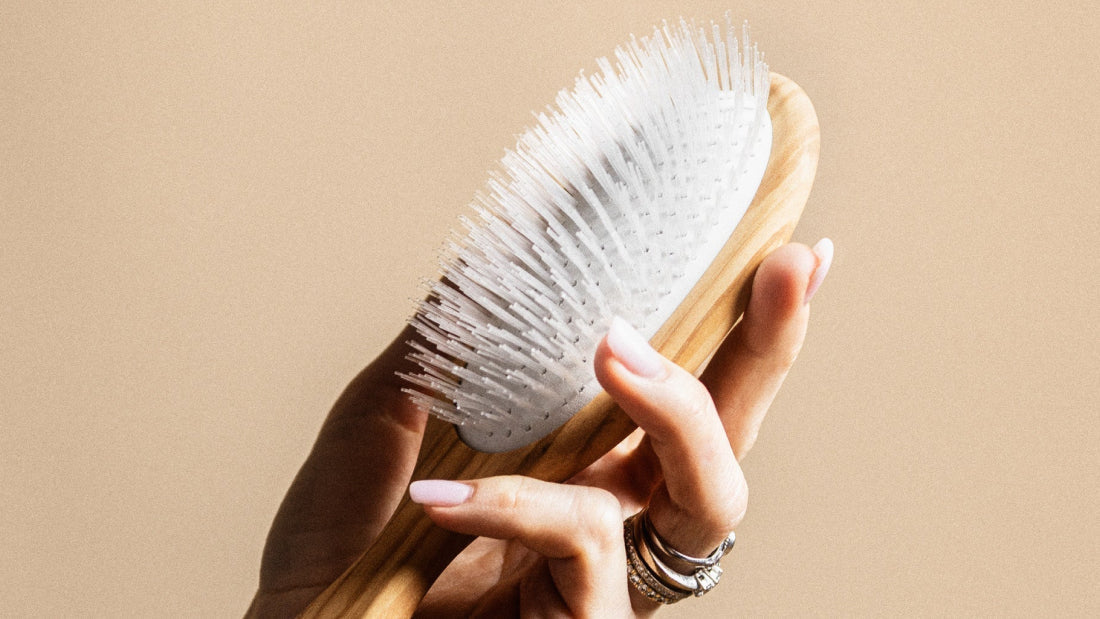
A guide to healthier hair and longer lasting brushes A hairbrush is a daily tool in your hair care routine. It is in direct contact with both hair and scalp and therefore naturally collects hair, dust, sebum, and product residue over time. Regular cleaning is crucial for hygiene, hair quality, and the brush's lifespan. A clean brush works more effectively, stimulates the scalp correctly, and distributes the hair's natural oils optimally. At LULAB, we consider the brush an active care tool. Therefore, maintenance should be a regular part of your routine. Why is it important to clean your hairbrush? Over time, the following accumulate: • Loose hairs• Dust and particles from the environment• Sebum from the scalp• Residues of styling and care products• Dead skin cells When these residues are not removed, it can: • Affect the scalp's balance• Reduce the brush's effectiveness• Increase the risk of oily hair• Shorten the brush's lifespan Especially if you use a brush with boar bristles or nylon fibers, regular cleaning is important to preserve the materials' function. How often should you clean your hairbrush? We recommend two levels of maintenance: After each use Remove loose hairs from the brush. This can be done with fingers, a comb, or a brush cleaner. This simple action takes only a few seconds and prevents accumulation. Once a week Perform a more thorough cleaning, especially if you use styling products or tend to have an oily scalp. How to clean your hairbrush in four steps This method applies to brushes with both boar bristles and nylon fibers. Step 1 Fill a sink or bowl with lukewarm water and add a small amount of mild shampoo. Create light suds in the water. Step 2 Hold the brush so that only the bristles or fibers are submerged in the water. Gently move the brush in the water to loosen dirt. Avoid unnecessarily soaking the wooden handle. Step 3 Rinse the bristles thoroughly under running water. Gently press out excess water with a towel. Step 4 Let the brush dry flat with the bristles facing downwards. Avoid heat sources such as radiators or underfloor heating, as this can affect wood and natural materials. Correct drying is crucial to maintain both form and function. Cleaning a boar bristle brush Boar bristles are a natural material that distributes the scalp's natural oils. To preserve this property, it is important: • Not to use water that is too hot• Not to use strong cleaning agents• To let the brush dry completely before using it again A well-maintained boar bristle brush can last for decades. Cleaning a brush with nylon fibers Bio-based nylon fibers are flexible and durable, but should still be treated correctly: • Avoid placing the brush with the fibers directly against a surface during drying• Ensure that the fibers maintain their shape during drying This ensures that detangling remains gentle and precise. A hairbrush is a long-term investment A quality brush is designed to last for many years. With proper maintenance, it can be a constant tool throughout your life. At LULAB, we work with handmade brushes manufactured in France from carefully selected materials such as olive wood, natural rubber, and natural fibers. They are created for daily use and to last. By cleaning your brush regularly, you ensure: • Optimal function• Better hair and scalp health• Longer lifespan• A more hygienic care tool A clean brush is a prerequisite for healthy hair. See all LULAB's olive wood hairbrushes – choose by hair type and add your engraving.

How to avoid yellow tones in your hair
Brassy Hair? How to Remove Warm Tones with Purple Shampoo Many people experience the same thing after a visit to the hairdresser: Their hair is beautifully blonde or light, but after a few weeks, the familiar yellow undertones appear. This can happen whether the hair is bleached, coloured, or naturally grey, and it's due to entirely normal processes in the hair shaft. Here you can learn more about why hair turns yellow after bleaching, and how purple shampoo (also called silver shampoo) can be a simple tool to maintain a cooler tone in your hair between colourings. Why can blonde hair get a yellow tint? Bleached, grey, and naturally blonde hair often turns yellow (or brassy) over time due to a combination of chemical and environmental factors. When you bleach your hair, you remove the natural pigment melanin, but there are often underlying warm tones (like yellow or orange from pheomelanin) that are not completely removed. These tones become more visible as the colour fades. Here are the primary causes: Oxidation and sunlight: Imagine your hair as a white T-shirt. When you go out in the sun, it slowly starts to fade and get a yellowish tint. The same happens to your hair when UV rays and oxygen "oxidise" the last pigments in the hair shafts.Fading of toners or colour: The toner often applied after bleaching to neutralise yellow tones doesn't last forever. Over time, it washes out, revealing the natural warm undertones.Water and minerals: Think of your hair as a sponge. When you wash it in hard water with minerals like iron or copper, it's a bit like pouring tea or coffee on a white tablecloth – it slowly sets in and gives a yellowish tint.Incomplete bleaching: If the bleaching doesn't lift the hair sufficiently (e.g., due to low-quality bleach or incorrect developer), pigments are left behind that oxidise and turn yellow.Other factors like pollution, product residue, or frequent washing can also contribute. To counteract this, you can use purple shampoo (toner) or protect your hair from sun and minerals. Tips for prevention: Use purple shampoo as needed when you need to neutralise yellow tones. Protect from the sun with a hat or UV protection in your hair products. Install a water filter to reduce minerals. Choose professional products for better bleaching Grey hair and yellowish tint Grey hair is particularly sensitive to environmental influences because it lacks the natural pigments that protect and keep the colour even. Many people find that even a beautiful silver sheen can develop a yellowish tint over time. Here, a shampoo for grey/light hair that contains violet pigments can help refresh the tone, making the hair appear clearer and more uniform. What does silver shampoo do? Silver shampoo and purple shampoo work based on colour theory: Purple and violet are complementary colours to yellow and orange. When you wash your hair with a shampoo containing violet pigments, a small amount of colour is deposited, neutralising the warm tones. The result is a cooler shade, often similar to the one you had right after your salon visit. How to use silver shampoo? For the best results, use purple shampoo correctly: Wet your hair thoroughly. Distribute the shampoo evenly from root to tip. Then wash your hair. Our Purple shampoo does not require it to sit in the hair for an extended period. Rinse thoroughly. Preferably use a moisturising conditioner afterwards. TIP: Overuse can give the hair a slight purple tint, so use as needed. Can yellow hair after bleaching be avoided? Completely avoiding yellow hair can be difficult, especially if the hair is bleached or coloured light. Therefore, many use a combination of: Purple shampoo to neutralise yellowish tint UV-protective products to minimise sun exposure Gentle washing with sulfate-free shampoo Moisture and nourishment to strengthen hair after bleaching If you have damaged hair after bleaching, it can be beneficial to tailor your purple shampoo so that the hair receives both care, moisture, and colour correction through the purple pigments. Shampoo for grey hair: what should you choose? When choosing the best shampoo for grey hair, it's a good idea to consider both colour and care. Both grey and bleached hair often need extra moisture and protection so that it doesn't become dull or dry. A good shampoo for grey hair therefore often combines: Violet pigments that remove yellow tones Moisturising ingredients Gentle cleansing without sulfates and silicones When should you consider toning colour for yellow hair? If the hair is very yellow or orange, a toning colour for yellow hair can be a solution. A toner provides more intense colour correction than shampoo alone, but also requires more maintenance. Many therefore use purple shampoo as an easy way to prolong the effect of a toner. Grey, blonde, or bleached hair, remember this: Whether you have bleached hair, grey hair, or natural light highlights, sun and hot styling tools are among the biggest culprits when hair turns yellow. A simple routine with silver shampoo when the hair becomes too warm or yellow, combined with gentle care, is often enough to keep the colour fresh. If you want to know more about hair care or find products that suit you, you can always take a hair test and learn more about what your hair needs.