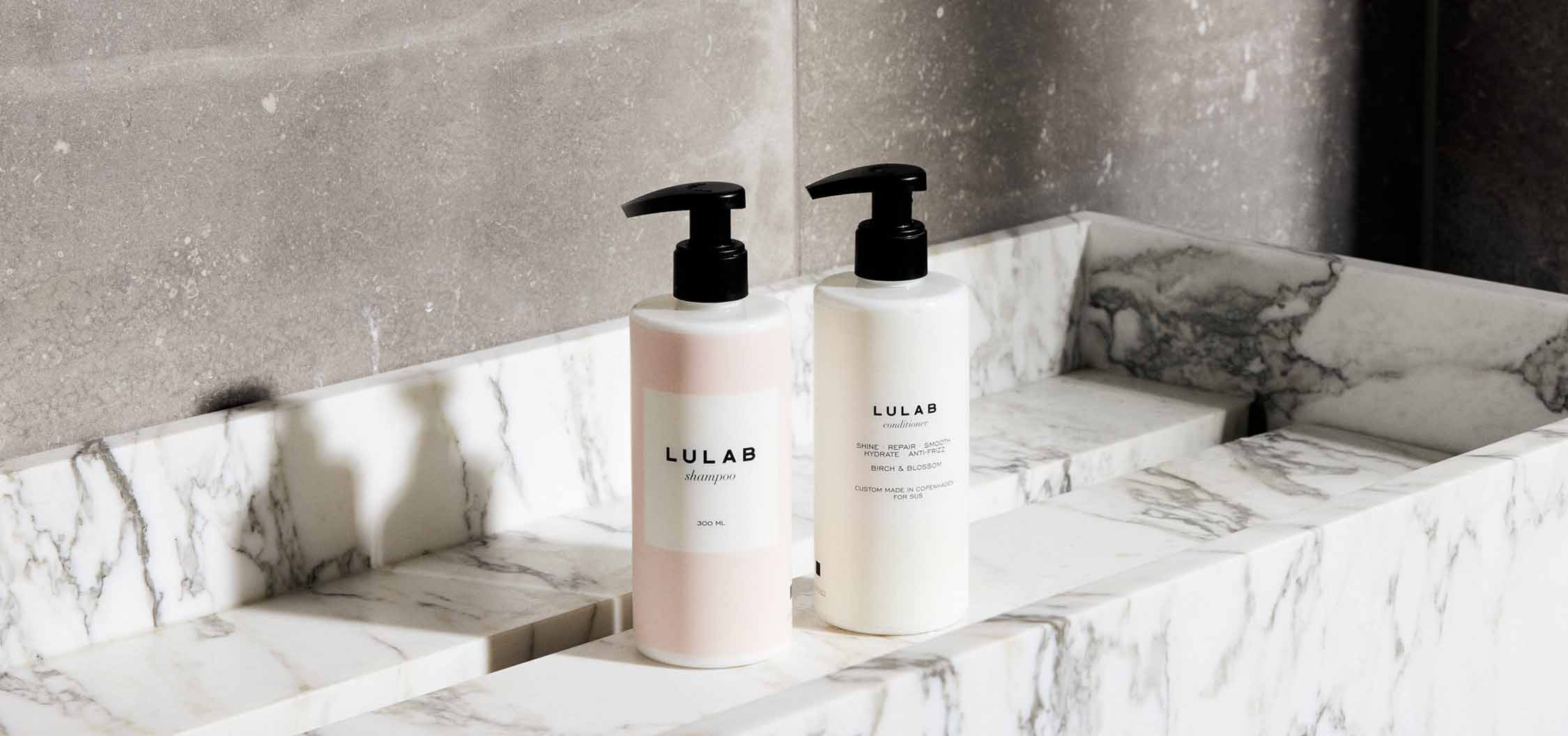
It's one of the most common hair care questions – and the answer is rarely the same from one person to the next. Some can go four days between washes, others feel greasy by the next morning. Here's a guide to how often you should wash your hair, what happens if you wash too much or too little – and how to find the routine that suits your scalp.
The short answer
Most people do well washing their hair 2-3 times a week. But that's an average, not a rule. The right frequency depends on three things:
- Your scalp – how much sebum (natural oil) it produces
- Your hair type – fine, coarse, straight or curly hair all behave very differently
- Your everyday life – exercise, styling products, hats and environment
Notice that we start with the scalp. It's your scalp that determines how often you need to wash – not the lengths of your hair.
What happens if you wash your hair too rarely?
Your scalp produces sebum around the clock, and together with sweat, dead skin cells and leftover styling products it forms a layer that builds up at the roots. If too much time passes between washes, you may notice:
- Hair that feels heavy, flat and greasy at the roots
- Itching and irritation on the scalp
- Worsening dandruff – the yeast (Malassezia) linked to dandruff feeds on the scalp's oils
- Clogged hair follicles, which create poorer conditions for growth
In other words, a clean scalp isn't just about looking fresh. It's the foundation of healthy hair. Read more about why you should care for your scalp the way you care for your face.
What happens if you wash your hair too often?
The problem with frequent washing is rarely the water – it's the shampoo. If you wash daily with a shampoo containing harsh sulphates, you strip away not just dirt but also the natural oils that protect your hair and scalp. The result can be dry lengths, a tight and irritated scalp, and colour that fades faster.
If, on the other hand, you wash with mild cleansing agents tailored to your scalp, you can easily wash often without stressing your hair. That's why LULAB's customised shampoo is free from sulphates, silicones and parabens – so it cleanses thoroughly, but never strips.
Guide: How often should you wash your hair, by hair type?
Oily hair and scalp
Recommendation: Every day or every other day.
If your scalp produces a lot of sebum, there's no reason to wait. Frequent washing with a mild shampoo keeps your scalp balanced and prevents itching and dandruff. If you need a deeper cleanse – for example after several days of dry shampoo or styling products – use our Customised Charcoal Shampoo as a first wash. The organic charcoal gently deep-cleanses without drying out.
Dry hair
Recommendation: 1-2 times a week.
Dry hair needs to hold on to as much of the scalp's natural moisture as possible. Choose a shampoo with hydrating actives, and always use conditioner on the lengths. If your scalp itself is also dry and itchy, a customised scalp serum can deliver moisture exactly where it's missing.
Fine hair
Recommendation: Every other day.
Fine hair gets greasy faster because sebum travels easily down the thin strands. At the same time, the hair falls flat at the slightest build-up. Wash often, but lightly – and avoid heavy conditioning products close to the roots.
Curly and coarse hair
Recommendation: Once a week – up to twice if needed.
In curly hair, sebum struggles to travel from root to tip, which is why curls are often dry in the lengths even when the scalp is normal. Fewer washes, plenty of conditioner and a boar bristle brush that distributes the scalp's own oils make a good combination.
Coloured hair
Recommendation: Twice a week.
Every wash opens the hair cuticle slightly, and pigments slowly wash out. The fewer washes, the longer your colour lasts. Wash in lukewarm water, choose colour protection as a goal in your customised shampoo – and add a purple shampoo or blue shampoo if your tones need adjusting.
The myth of "training" your scalp
You may have heard that your scalp can be trained to produce less oil if you just hold out and wash less often. It sounds logical, but there is no solid evidence that it works. Sebum production is governed mainly by hormones and genetics – not by how often you wash. What often happens is that you simply get used to having a bit more oil in your hair. That's perfectly fine if it works for you, but it's not a biological change.
Three signs it's time to wash your hair
- Your hair is flat at the roots – even right after brushing
- Your scalp itches or feels tender – a sign of build-up
- Your hair smells different – the scalp's oils change character when they've been sitting too long
How to get more out of every wash
- Focus on the scalp. Massage the shampoo in with your fingertips for 1-2 minutes. The lengths get clean from the lather as you rinse.
- Double cleanse when needed. The first wash removes dirt and product, the second wash cares. If you need extra cleansing, use charcoal shampoo as your first wash and your customised shampoo as the second.
- Conditioner on the lengths – not the scalp. That way you avoid weighing down the roots.
- Rinse in lukewarm water. Very hot water can irritate and dry out the scalp.
- Brush before washing. A light brush with the Care Brush loosens build-up and distributes the oils, so the shampoo works better.
Frequently asked questions
Can you wash your hair every day?
Yes – if your shampoo is mild enough. The problem with daily washing arises when the shampoo is too harsh and strips the natural oils. With a sulphate-free shampoo tailored to your scalp, daily washing can be completely unproblematic.
Should you wash your hair after exercise?
Sweat itself doesn't damage hair, but sweat and sebum together can irritate the scalp and cause odour. Rinse with water at the very least, and wash with shampoo if you've trained hard or have an oily scalp.
How often should you wash your hair if you have dandruff?
More often than you might think. Dandruff typically gets worse when sebum is allowed to build up. Wash 3-4 times a week with a shampoo tailored for dandruff, and read our guide to dandruff problems.
Is dry shampoo an alternative to washing?
Dry shampoo can buy you an extra day between washes, but it doesn't cleanse – it absorbs. Use it as a pause, not a replacement, and always wash thoroughly afterwards.
Find your own routine
The best hair washing routine is the one tailored to you – not an average. When you take LULAB's hair analysis, we adapt the formula of your customised shampoo and conditioner to your scalp, your hair type and the goals you have for your hair. So you can wash whenever your hair needs it – and trust that every wash both cleanses and cares.