Losing more hair than usual after giving birth? You are far from alone. Postpartum hair loss – often called postpartum shedding – affects a great many new mothers, typically 2–4 months after the birth. It is normal, it is temporary, and in the vast majority of cases the hair grows back entirely on its own. Here is why it happens, and how best to care for your hair and scalp along the way.
The short answer
Postpartum hair loss is caused by the natural drop in oestrogen after childbirth. During pregnancy, high oestrogen levels keep a larger share of your hairs in the growth phase than usual – which is why many women experience fuller hair while pregnant. After the birth, the hormone balance normalises, a large proportion of hairs enter the resting phase at the same time, and they shed around 2–4 months later. The phenomenon is called telogen effluvium. It typically subsides within 6–12 months, and you cannot stop the process – but you can treat your hair and scalp gently and give the new hair the best possible conditions.
Why do you lose hair after pregnancy?
Your hair grows in a cycle: a long growth phase, a short transition phase and a resting phase, at the end of which the hair sheds to make room for a new one. Normally the hairs are spread evenly across the phases, so you shed a limited number of hairs each day without noticing.
Pregnancy hormones shift that distribution. Oestrogen prolongs the growth phase, so fewer hairs reach the resting phase – the hair feels thicker and sheds less. When oestrogen falls after the birth, the body catches up: many hairs move into the resting phase at once and shed over the course of a few months. It can look dramatic in the shower and hairbrush, but it is not a sign that something is wrong – it is your hair's cycle finding its way back to its normal rhythm.
When does the shedding start and stop?
The course varies from woman to woman, but often follows roughly the same pattern:
- 0–2 months after the birth: The hair is still relatively full.
- 2–4 months after the birth: The shedding begins, often quite suddenly.
- 4–6 months after the birth: The shedding is typically at its peak.
- 6–12 months after the birth: The shedding eases off and new hairs grow in.
For most women, hair density is back to normal around a year after the birth. The new hairs still need to grow long, though, so it can take longer before your hairstyle feels like it did before.
Baby hairs: the short new hairs along the hairline
When the new hairs start growing in, they often appear as short, fine "baby hairs" along the hairline and at the temples. They can stick out and be hard to style, but they are actually a good sign: they show that regrowth is under way. Be patient and gentle with them – avoid tugging at them with your brush, and do not force them into place with tight hairstyles or harsh heat styling.
How to care for your hair and scalp after giving birth
You cannot prevent the hormonal shedding, but you can take good care of the hair you have – and of the scalp your new hair will grow from:
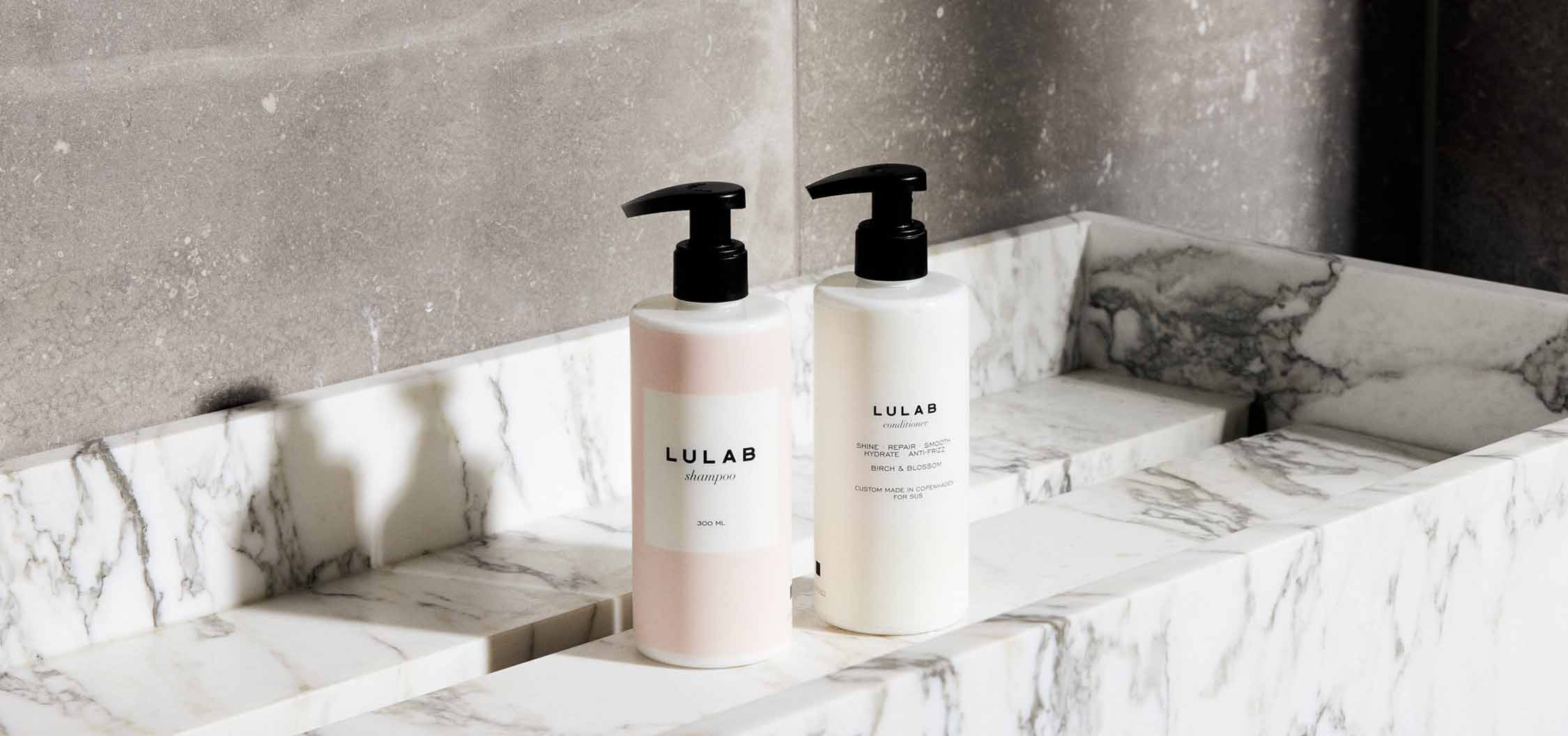
- Wash gently. A mild, customised shampoo free from sulphates, silicones, parabens and mineral oils cleanses the hair without drying out the scalp – precisely now, when it has extra work to do.
- Give your scalp some attention. A healthy scalp is the foundation of healthy hair growth. LULAB's Customised Scalp Serum™ works like a mask for the scalp, adds moisture and can be tailored with hair growth as one of up to three goals out of six. You can read more about how scalp serum for hair growth works.
- Massage your scalp. Spend 2–3 minutes on a gentle scalp massage when you are washing your hair or applying serum anyway. It stimulates the scalp and turns your care routine into a small, calm ritual in a busy everyday life.
- Detangle gently. Wet hair is extra vulnerable. A detangling brush such as the Detangling Brush No D1 gently loosens tangles and knots in both wet and dry hair, so you do not pull out more hairs than necessary. See also our guide on how to brush your hair correctly.
- Avoid tight hairstyles. Tight ponytails and buns pull at the hairline – exactly where the new hairs are coming in. Choose loose styles and soft hair ties.
- Look after yourself. Sleep deprivation and a body that is still recovering are part of life with a newborn. A varied diet and whatever breaks you can find benefit your whole body – hair included.
When should you talk to a doctor?
Postpartum hair loss is benign and passes on its own. But contact your doctor or a dermatologist if the shedding continues markedly beyond 12 months, if you are losing hair in distinct patches, or if your scalp is sore, red or has open sores. After giving birth, low iron stores or a thyroid imbalance can also affect your hair – a blood test at your doctor's can clarify this.
Frequently asked questions about postpartum hair loss
How long does postpartum hair loss last?
It typically begins 2–4 months after the birth, peaks around 4–6 months and subsides within 6–12 months. For the vast majority it is temporary.
Can you prevent hair loss after giving birth?
No, not the shedding itself – it is a hormonal process. But gentle hair care, a healthy scalp and loose hairstyles minimise the extra hair loss caused by wear and pulling.
Does breastfeeding make the shedding worse?
No. The Danish nickname "ammehår" (nursing hair) is misleading – the shedding is caused by the hormone drop after the birth, not by breastfeeding. You do not need to stop breastfeeding for the sake of your hair.
Will my hair come back?
Yes. For most women, hair density is back to normal around a year after the birth, and the short baby hairs along the hairline are a sign that regrowth is already under way.
Care that suits your hair right now
Your hair has different needs after giving birth than before. Take LULAB's hair analysis and get a shampoo, conditioner and, if you wish, a scalp serum tailored to exactly your hair and scalp – as they are today. If your hair loss is more seasonal than hormonal, you can read about seasonal hair loss in autumn instead.