Suddenly noticing more hair in the shower drain, on your pillow or in your hairbrush as summer draws to a close? You're far from alone. Seasonal hair loss affects many of us every year during the transition from summer to autumn, and in most cases it's a completely temporary phase. Here's a level-headed look at why it happens and what you can do to support your scalp during this period.
The short answer
Seasonal hair loss is a normal, temporary increase in the number of hairs shed as the seasons change – particularly over autumn. It's linked to your hair's natural growth cycle and isn't in itself a sign of an underlying hair problem. You can support your scalp with a gentle hair-washing routine, regular scalp massage and a scalp serum tailored to your scalp goal. If your hair loss doesn't return to its normal level after a few weeks, or you experience sores or persistent irritation, you should contact a doctor or dermatologist.
Why you lose more hair in autumn
Every hair on your head goes through its own cycle with a growth phase, a transition phase and a resting phase, in which the hair eventually falls out and is replaced by a new one. Normally, these cycles are staggered, so you don't notice it. But as the days grow shorter and light levels change over late summer and autumn, more hairs can enter the resting phase at the same time. You typically notice the result a couple of months later, when those hairs fall out – hence the feeling that "everything happens at once" in September and October.
How much hair loss is normal
It's completely normal to lose hair every day as part of natural renewal. During periods like this, you may notice more hair falling than usual without it being a sign of a problem. As a rule of thumb, look out for:
- Hair loss that increases gradually and settles down again after a few weeks to a couple of months
- Hair loss that's evenly spread across the whole scalp – not in defined patches
- A scalp free from sores, persistent redness or intense itching
If this sounds like you, it's typically a seasonal fluctuation rather than an actual hair loss problem.
How to support your scalp during this period
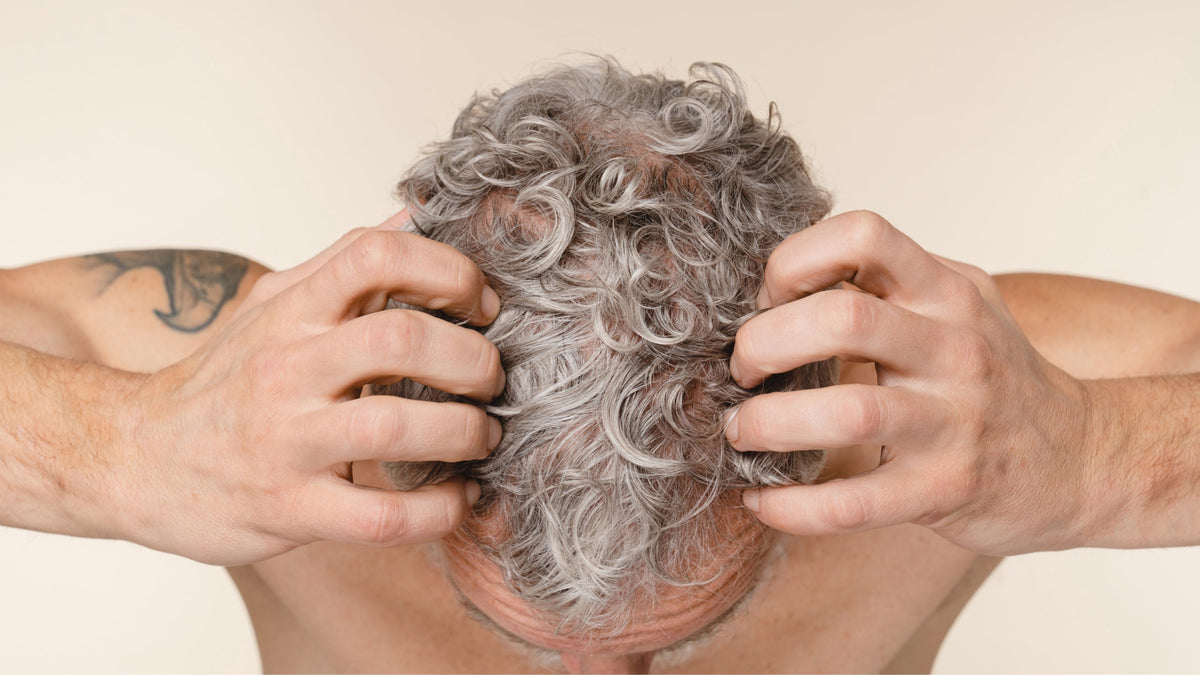
Scalp massage 1–2 times a week
A gentle scalp massage can be a nice, supportive part of your routine when you're brushing or washing your hair anyway. Use a brush with natural bristles when your hair is dry, so you distribute your scalp's own oils through the lengths at the same time. LULAB's Care Brush, handmade in France from European olive wood with first-cut boar bristle, is made specifically for the daily care of fine to medium hair. Want to know more about which type suits your hair? Read our guide to choosing the right hairbrush for your hair type.
A scalp serum tailored to your goal
LULAB's Customised Scalp Serum™ is designed to support six different scalp goals: increased hair growth, scalp health, anti-dandruff, reduced irritation, increased moisture and reduced oil production. You can combine up to three of these goals, so your serum addresses exactly what your scalp needs right now – for example, a combination of increased hair growth and increased moisture over autumn, when the scalp can easily become dry. The serum is applied as a mask for the scalp and is vegan, as well as being free from sulphates, silicones, parabens and mineral oils. You can read more about the mechanism behind it in our article on how scalp serum works for hair growth.
Be gentle on your scalp when washing your hair
Over-cleansing can heighten the feeling of an irritated scalp during a period when it's already sensitive. Choose a customised shampoo free from sulphates, silicones, parabens and mineral oils, and adjust how often you wash to suit your scalp type rather than a fixed rule. Not sure how often you should be washing your hair right now? Find a good starting point in our guide to how often to wash your hair based on hair type and scalp.
Do diet, sleep and stress make a difference
Your hair isn't isolated from the rest of your body, and a busy period with too little sleep, irregular meals or a lot of stress can feel as though it intensifies an already seasonal fluctuation. It's not about finding one particular solution, but about the same broad principles that apply to the rest of your body's health: fairly regular sleep, a varied diet and realistic breaks in a busy everyday life. None of these are a guarantee against hair loss, but they're a sensible framework to keep in mind over autumn.
When to contact a doctor or dermatologist
Seasonal hair loss usually resolves on its own after a few weeks to a couple of months. If, however, you experience sudden and significant hair loss, hair loss in defined patches, sores on the scalp or persistent scalp problems, don't try to resolve it yourself. Contact your doctor or a dermatologist, who can assess the cause and refer you on if needed.
Frequently asked questions about seasonal hair loss
How long does seasonal hair loss last?
Typically, you'll see an increase over a few weeks to a couple of months during autumn, after which it settles down again.
Can you prevent seasonal hair loss?
You can't change your hair's natural growth cycle, but a gentle hair-washing routine and scalp care can support a good foundation for your scalp.
Is scalp massage enough to stop hair loss?
Massage alone won't stop a seasonal fluctuation, but it can be a nice, supportive part of your daily routine.
When is hair loss abnormal?
If your hair loss is significant, sudden, appears in defined patches, or your scalp has sores or persistent irritation, contact a doctor or dermatologist rather than waiting it out.
Take your hair analysis and find your routine
Want a scalp routine tailored to exactly your scalp and your hair? The first step is to take LULAB's hair analysis. Based on your answers, we put together a formula and recommend the scalp goals that make the most sense for you right now.